Preparing for Guild Negotiations: What Payroll, Production, and Finance Teams Should Expect
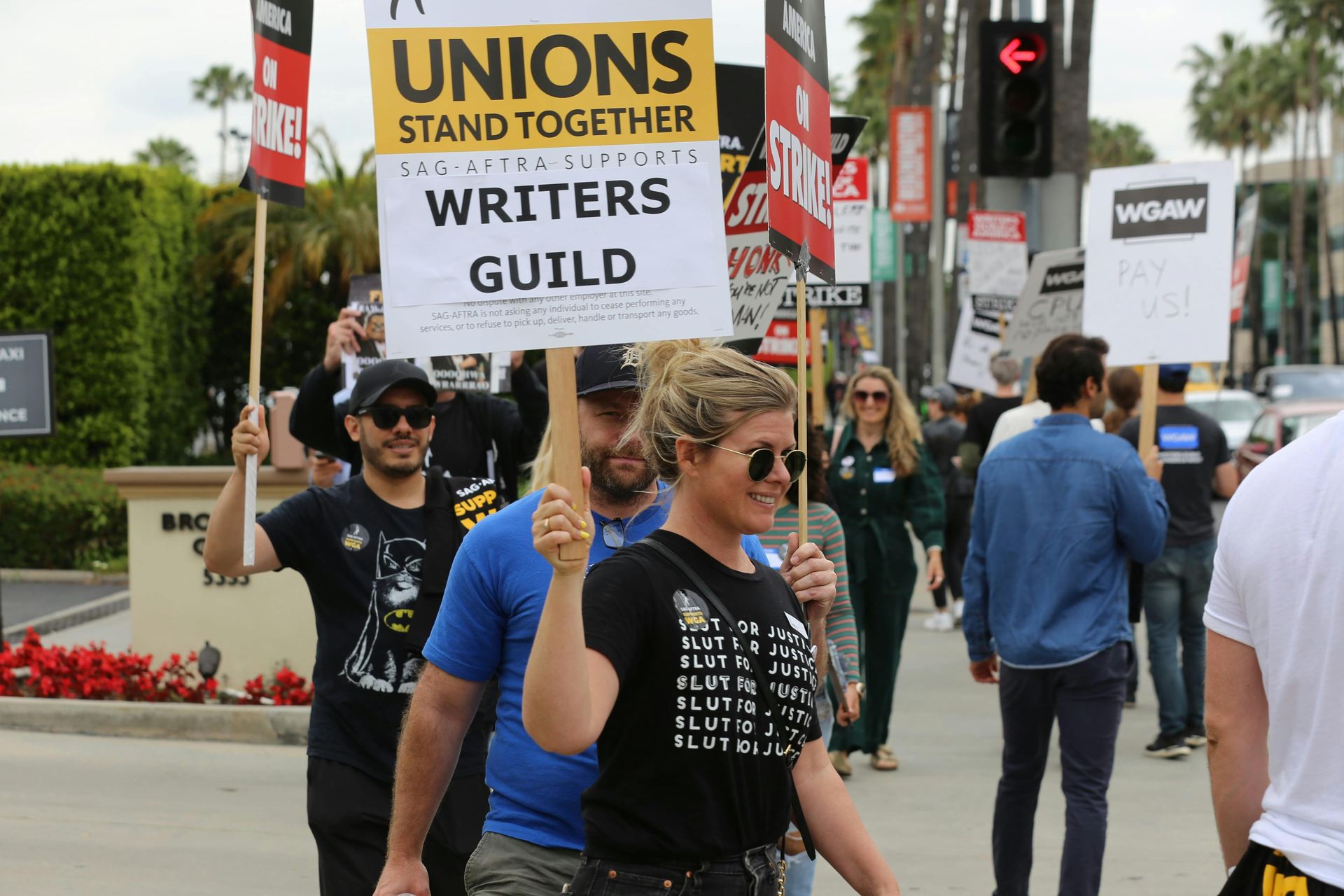
The entertainment industry is steadily moving toward one of the most consequential guild bargaining cycles in modern history. While much of the operational focus has remained on post-strike recovery and the continued reshaping of the streaming economy, 2026 is already emerging as a pivotal year for the next round of negotiations involving SAG-AFTRA, the Writers Guild of America, and the Directors Guild of America.
These negotiations will not be limited to incremental wage adjustments. They will directly confront unresolved structural questions about artificial intelligence, staffing compression, streaming compensation, safety enforcement, travel rules, and the long-term sustainability of pension and health plans. For payroll, production, and finance teams, the impact will be immediate and measurable. Contract changes will affect everything from deal memo language and onboarding workflows to residual reporting, turnaround penalties, and labor budgeting models.
Companies that approach 2026 as a future problem rather than a current planning horizon will almost certainly experience higher correction volume, greater grievance exposure, and increased audit risk. By contrast, organizations that treat this as a strategic preparation window will be positioned to absorb changes with far less disruption.
The Bargaining Climate Heading Into 2026
The 2026 guild negotiations will unfold in a labor environment that is fundamentally different from what existed even five years ago. The post-pandemic production surge, the rise and correction of the streaming market, and the unprecedented 2023 strike actions permanently shifted labor dynamics across the industry. Studios are now operating under tighter financial constraints, platforms are focused on profitability over scale, and production schedules are increasingly compressed.
At the same time, the creative workforce is confronting persistent economic pressure from inflation, healthcare costs, housing affordability, and irregular employment cycles. These conditions are driving the guilds toward broader structural demands rather than narrow rate-focused negotiations. Issues of job stability, staffing protections, compensation transparency, and AI safeguards are now central to every bargaining strategy.
For payroll and finance leadership, this means the 2026 negotiations will not produce contained changes. They will reshape multiple layers of payroll compliance at once, often in overlapping and interdependent ways.
Artificial Intelligence as a Cross-Guild Payroll Issue
Artificial intelligence remains the single most transformative and unsettled labor issue facing the industry. While interim protections were negotiated in recent cycles, the technology itself continues to advance more rapidly than existing contract language can regulate. Digital replicas, voice cloning, AI-assisted writing tools, and automated post-production systems are now operational realities, not hypothetical risks.
As the guilds push for stronger consent, compensation, and usage protections, new compensable categories of work are likely to emerge. From a payroll standpoint, this creates immediate complexity. New classifications must be recognized, rate structures must be built, and reporting requirements may expand to include digital exploitation triggers that did not previously exist.
The risk is not limited to performers. Writers and directors are equally affected as AI tools increasingly participate in script development, revisions, previsualization, and editorial processes. Payroll teams will be operating at the front line of enforcement whenever digital labor becomes compensable under new agreements.
Staffing Compression and Its Cost Impact
Over the past several years, writing rooms have shrunk, assistant director teams have been streamlined, prep schedules have tightened, and productions have increasingly relied on short-term engagements instead of longer guaranteed assignments. While these shifts have allowed studios to control upfront costs, they have also intensified workloads and destabilized employment patterns.
Minimum staffing and guaranteed employment protections are expected to be a central focus of the 2026 negotiations, particularly for writers and assistant directors. If staffing minimums are restored or expanded, the impact on payroll is both immediate and layered. Increased headcount changes weekly payroll volume, drives overtime exposure, raises fringe contribution totals, and reshapes episodic budgeting models.
This is not merely a creative issue. It is a labor cost forecasting issue that directly affects production finance strategy.
Streaming Economics and the Future of Compensation
The original economic frameworks governing streaming compensation were built for an era of growth, not an era of contraction and consolidation. As platforms shift toward fewer projects and greater profitability pressure, the guilds are expected to push aggressively for compensation models that better reflect audience performance and long-term content exploitation.
Residual structures, transparency provisions, and performance-based compensation formulas are likely to evolve again in 2026. From a payroll and finance standpoint, residual accounting is already one of the most complex compliance environments in the industry. Any adjustments to these formulas immediately affect payment schedules, data reporting obligations, audit exposure, and long-term studio financial forecasting.
Studios that are not already modeling how residual reform could affect long-tail labor costs are likely underestimating their future exposure.
Pension and Health Pressures Across Guilds
Multiemployer pension and health plans continue to operate under increasing financial strain as employment becomes more episodic and production volume fluctuates. Contribution rate debates, eligibility thresholds, and employer funding responsibility remain among the most sensitive and financially consequential bargaining issues.
For payroll teams, fringe changes ripple instantly into gross-to-net calculations, labor cost budgeting, and audit exposure. For finance executives, they influence how productions are greenlit, staffed, and forecasted. Even modest contribution increases can translate into significant labor cost adjustments across large-scale productions.
This is one of the reasons why payroll and finance teams cannot afford to treat benefit negotiations as a secondary issue. They sit at the core of production cost sustainability.
Safety, Rest, and Turnaround Enforcement
Compressed schedules and accelerated production timelines have heightened fatigue risk across all creative departments. Long days, short turnarounds, aggressive travel schedules, and overnight transitions have become increasingly common. As a result, safety, rest period protections, and turnaround enforcement are expected to receive renewed attention in the 2026 negotiating cycle.
Any expansion of rest requirements or penalty enforcement mechanisms directly translates into increased premium exposure for payroll. Turnaround violations, forced calls, and rest period penalties are already among the most frequent sources of payroll disputes and retroactive adjustments. If protections are strengthened, those exposures will increase accordingly.
For production teams, this also reshapes scheduling strategy. For payroll teams, it becomes a core compliance enforcement function.
Travel, Remote Work, and Jurisdictional Complexity
Remote hiring and long-distance engagement are now embedded in the production infrastructure. Writers, performers, and directors are routinely engaged across state lines and international borders. Travel pay, per diem, housing stipends, and jurisdictional tax treatment continue to create compliance challenges under existing agreements.
Refinements to travel compensation rules in 2026 will directly affect taxable wages, payroll reporting classifications, work location compliance, and fringe eligibility. Travel misclassification remains one of the most frequent and costly payroll audit findings across all three guilds.
What Wage Adjustments Will Mean for Budgets
Wage increases across SAG-AFTRA, WGA, and DGA are virtually guaranteed in 2026. Inflationary pressure, benefit cost escalation, and workforce instability are driving robust economic proposals. However, the true financial impact of wage increases extends far beyond base rates.
Wage escalation amplifies every derivative labor cost, including overtime, turnaround premiums, penalty payments, residual bases, pension and health contributions, workers’ compensation premiums, and payroll taxes. For episodic content in particular, even a modest rate increase can materially shift per-episode labor projections.
Finance teams that are not running labor cost sensitivity models now will be forced to absorb the full effect later under compressed production timelines.
How Guild Changes Reshape Payroll Systems
Contract ratification does not stay on paper. It must be built into systems. Rate cards are updated. Classification rules are reconfigured. Premium logic is rewritten. Residual reporting structures are revised. Onboarding documents change. Deal memo language is rewritten.
Payroll systems often operate in parallel configuration states during contract transitions, which creates elevated manual override risk. The absence of proactive system testing almost always leads to backlog conditions, accelerated correction cycles, and audit exposure during the first months after ratification.
Historically, the highest concentration of payroll errors occurs in the first six to twelve payroll periods following major guild contract changes.
Why Early Compliance Strategy Matters
The most costly payroll failures do not happen because companies lack information. They happen because compliance planning lags behind production activity. Hiring begins while negotiations are unresolved. Tentative assumptions guide staffing. When terms are finalized, payroll is forced into large-scale retroactive corrections across multiple workweeks or even completed seasons.
Early compliance strategy allows studios and payroll companies to model labor exposure, stress-test budgeting scenarios, pre-configure system logic, and train staff before ratification deadlines create pressure.
Preparation is not about predicting exact outcomes. It is about building structural capacity to absorb change without destabilizing payroll operations.
The Critical Role of Training During Contract Transitions
Even the most experienced payroll professionals struggle during contract transitions if training is delayed. Informal guidance spreads quickly. Production teams adopt inconsistent interpretations. Payroll teams are forced to reconcile conflicting rule applications in real time.
Structured training dramatically reduces the most common transition failures, including rate misapplication, premium miscalculations, fringe errors, residual reporting mistakes, and classification disputes. The majority of errors during transition periods stem from outdated operational assumptions applied to new rules, not from incompetence.
Teams that receive pre-ratification and immediate post-ratification training move through these transitions with significantly lower correction volume and far less grievance exposure.
Fractional Labor Relations Support as a Risk Control Strategy
Most studios and payroll companies do not maintain full-time in-house labor relations leadership. During active bargaining cycles, this creates a disconnect between contract interpretation, production operations, and payroll enforcement.
Fractional labor relations consulting provides executive-level guidance without the cost burden of permanent internal labor departments. It supports real-time contract interpretation, impact analysis, payroll-production alignment, audit preparation, and compliance strategy design during high-risk transition periods.
As the 2026 negotiations approach, more companies are recognizing that waiting until disputes arise to seek this level of support is a costly mistake.
What Payroll and Finance Teams Should Be Doing Now
Preparation for 2026 should already be underway. Payroll leaders and finance executives should be analyzing historical retro patterns from prior guild ratifications, stress-testing labor escalation models, auditing residual reporting workflows, reviewing fringe exposure, and identifying training gaps across payroll teams.
These steps do not require knowing exactly how negotiations will conclude. They require acknowledging that material change is coming and that its impact will be operational, not theoretical.
A Final Word on 2026 Readiness
The 2026 guild negotiations will reshape how creative labor is compensated, scheduled, protected, and classified across the industry. These changes will touch every payroll system, every budget, and every production workflow.
Companies that treat 2026 as a last-minute compliance problem will face avoidable disruption. Companies that prepare early will navigate the transition with control, predictability, and resilience.
Companies that prepare early have fewer retro checks, fewer grievances, and far lower risk of production disruption.
Share this Post